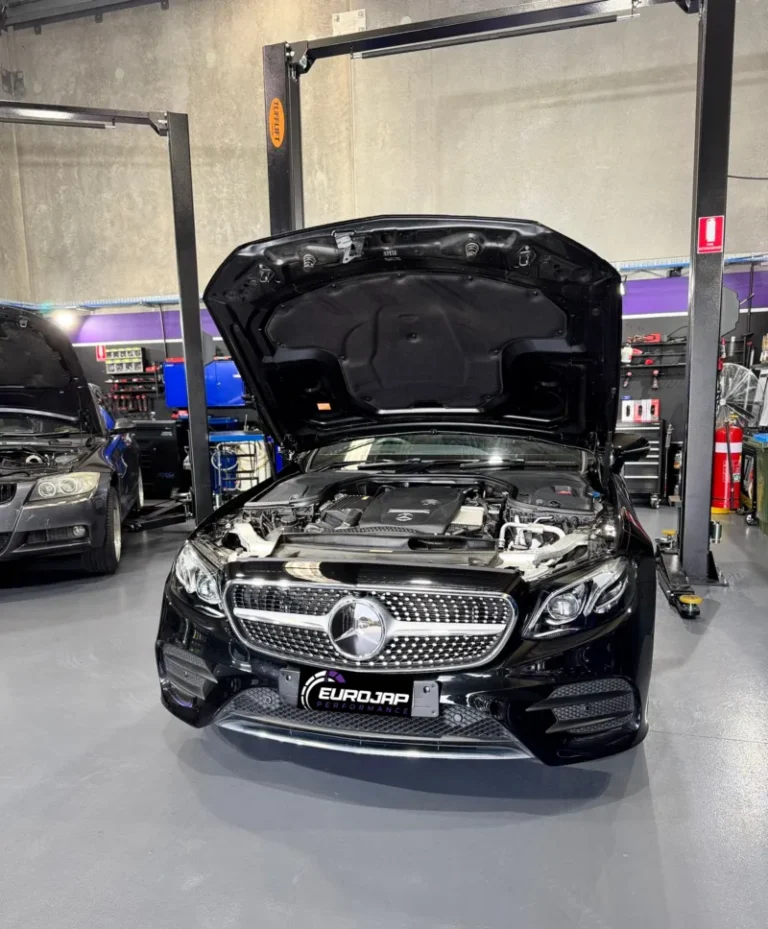
Common BMW cooling system problems include coolant leaks, water-pump or thermostat faults, ageing hoses, radiator issues and overheating warnings. The exact cause varies by model and engine, so a dashboard alert is not a diagnosis. At our EuroJap Performance workshop in Adelaide, we assess symptoms, coolant loss and relevant fault information before recommending repairs to your BMW.
What should you do when your BMW warns about overheating?
Treat an engine temperature warning seriously. If your BMW reports overheating, reduce load, pull over safely and switch off the engine as soon as it is safe to do so. Continuing to drive a genuinely overheating engine can cause expensive damage. Never remove a hot expansion-tank cap; pressurised coolant can cause burns. If steam is present or the car is losing coolant rapidly, arrange roadside assistance rather than attempting to drive to our workshop. A warning might reflect low coolant, inadequate circulation, a fan problem or a sensor-related issue, so it deserves assessment instead of guesswork.
Coolant leaks are not always visible

You may notice a sweet smell, a low-coolant message, wet residue near a hose connection or dried deposits around the expansion tank. Sometimes a leak only appears when the system is hot and pressurised. BMW cooling systems can contain plastic connectors, hoses, tanks and seals that age differently across models. We inspect for evidence of leakage and use appropriate testing methods to locate the source. Topping up coolant repeatedly without identifying the cause can leave you stranded later. Use coolant of the correct specification and avoid opening a hot system.
Water pump and thermostat concerns
A water pump moves coolant through the engine and radiator; a thermostat helps regulate operating temperature. If circulation or temperature control fails, the engine may run hotter than intended. Some BMW engines use electronically controlled pumps or thermostats, which means scan-tool information may help guide diagnosis. A fault code can narrow the possibilities, but it does not automatically prove that an individual part should be replaced. We combine those results with visual inspection and other relevant checks. Tell us whether the problem appears during traffic, at highway speed or immediately after starting.
Radiator, fan and hose-related symptoms

Radiator damage, blocked passages, cooling-fan faults or deteriorated hoses can also contribute to abnormal operating temperatures. If the problem appears mainly while stationary, the fan and airflow system may warrant attention, although other causes are possible. If you find coolant under the car, photograph its location if it is safe to do so. Distinguish fresh coolant from water produced by the air-conditioning system; clear condensation beneath a parked vehicle is often normal. We inspect the complete system rather than choosing a repair based only on where a drip lands.
Why a pressure test and diagnostic assessment matter
Cooling-system faults can overlap. A low-coolant warning might come from a leak, an electrical signal or another condition. Pressure testing, system inspection and model-appropriate diagnostics can help identify the most likely cause, but each method has limitations. We review your vehicle\’s history, mileage, warning messages and any recent repairs before proposing the next step. If a component replacement is necessary, we discuss suitable parts, correct coolant specifications and whether related hoses or seals need attention. We do not assume that every BMW needs the same repair package.
Can cooling problems affect other engine components?

Persistent overheating can stress engine gaskets and other components. It is therefore important to address the original cooling-system fault and check for signs of consequential damage where warranted. Engine oil contamination, repeated coolant loss, abnormal exhaust behaviour or rough running may need further investigation, but none of these symptoms alone identifies a specific failure. Some BMW models also have model-dependent timing-system concerns; these are separate faults and should not be confused with normal coolant maintenance. You can read about our broader timing belt and timing chain service in Adelaide when those symptoms are relevant.
What happens after a cooling-system repair?
A successful cooling-system repair is more than fitting a replacement component. Depending on the BMW model and the fault, the system may require the correct coolant mix, a specified filling or bleeding procedure, leak checks and a confirmation that operating temperatures are behaving as expected. We explain the work carried out and what warning signs should prompt you to contact us again. We also discuss relevant adjacent parts without assuming they all need replacing. If a severe overheating event occurred, further assessment may be necessary before we can confidently discuss the engine\’s condition.
Book a BMW cooling-system inspection in Adelaide
If your BMW is losing coolant, showing an overheating alert or producing an unfamiliar temperature-related warning, arrange an inspection before the problem becomes urgent. Our BMW mechanics in Adelaide can review the complaint and explain the appropriate diagnosis and repair options. We work from 5/42–44 Moss Ave, Marleston SA 5033, convenient for Adelaide CBD commuters and nearby suburbs. Contact EuroJap Performance with your BMW model, engine or year if known, warning message and recent service history. If it is overheating now, do not drive it to us; organise safe transport.